
What materials are used to manufacture ring type joint gaskets?
Monday morning, a procurement engineer opens a data sheet for an offshore gas project and sees a line item that looks simple: ring type joint gasket, octagonal, 316L. Two weeks later, the mill rejects the lot because the hardness is outside the specified window and the material certificate does not match the sour-service requirement. That is the moment when the question becomes urgent: What materials are used to manufacture ring type joint gaskets? The answer is not a single metal, but a controlled family of forgings and machined alloys selected for pressure, temperature, corrosion, hardness, and traceability. Soft iron, low-carbon steel, stainless steel, duplex and super duplex, nickel alloys such as Inconel 625 and Monel 400, copper, aluminum, and titanium all appear in RTJ gasket specifications, but each grade has a narrow job. A material that seals perfectly in a sweet refinery line can fail quickly in sour gas, and a grade that passes a hardness check can still leak if groove finish, ring profile, and coating are not controlled. Ningbo Kaxite Sealing Materials Co., Ltd. helps buyers connect the material question to the actual service condition, so the purchase order is built on the right grade, the right hardness, and the right inspection record instead of a catalog guess.
In this guide: Material Map | Pain Point Solutions | Selection Table | Procurement Q&A | Supplier Support | Research Papers
Material Map: What the Common RTJ Gasket Grades Are Actually For
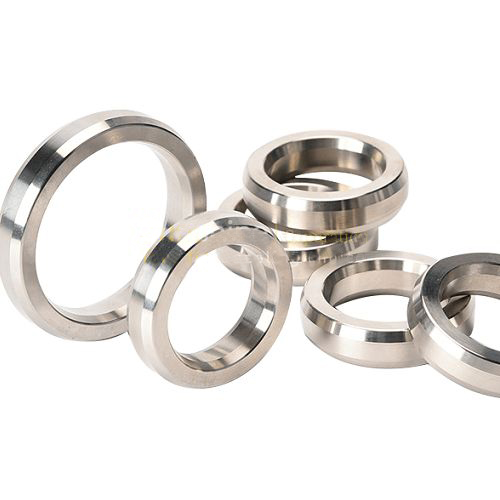
A buyer once sent a mixed material list for three flange classes on the same platform: soft iron for a low-pressure water line, 316L for a sweet hydrocarbon line, and Inconel 625 for a sour-gas tie-in. The list looked complete, but the purchase order did not state hardness limits, heat-treatment condition, or PMI requirements. The result was a delayed release because the supplier could not prove that the delivered rings matched the intended service. The solution is to treat Ring Type Joint Gasket materials as a service-match decision, not a commodity line. The table below gives procurement teams a practical starting point.
Table 1: Typical RTJ gasket materials and procurement parameters
| Material family | Typical grade | Hardness target or limit | Temperature and corrosion notes | Best-fit service | Procurement proof |
|---|---|---|---|---|---|
| Soft iron | Commercial soft iron | Usually low hardness; confirm project limit | Good conformability; limited corrosion resistance | Low-pressure, non-corrosive utility lines | MTC, hardness report, dimensional report |
| Low-carbon steel | ASTM A105, A350 LF2 | Controlled to avoid groove damage | Good strength; not for aggressive sour service unless approved | General oil and gas flanges | MTC, impact test when required, PMI |
| Stainless steel | 304, 316, 316L | Check maximum HBW against flange specification | Moderate corrosion resistance; chloride risk in some services | Sweet hydrocarbon, water, chemical lines | MTC, PMI, hardness, surface finish report |
| Duplex stainless steel | 2205, 2507 | Hardness control is critical for sealing and cracking resistance | High strength and chloride resistance; verify sour-service approval | Offshore, seawater, high-pressure process lines | MTC, ferrite content, PMI, hardness |
| Nickel alloys | Inconel 625, Monel 400 | Specify hardness window and heat-treatment condition | Excellent corrosion resistance; high cost requires tight scope control | Sour gas, high-temperature, aggressive chemical service | MTC, PMI, hardness, NACE documentation where required |
| Copper and aluminum | Copper, aluminum alloys | Low hardness; protect sealing faces | Good conformability; limited temperature and corrosion range | Low-pressure specialty connections | MTC, dimensional and visual inspection |
| Titanium | Commercially pure titanium | Confirm galling and hardness controls | Lightweight and corrosion resistant; niche sealing behavior | Chemical, marine, and specialty applications | MTC, PMI, hardness, surface condition report |
For ring type joint gaskets, the purchasing decision should always include pressure class, groove profile, flange standard, medium, temperature, and required certification. A low price per piece means little if the ring cannot pass hardness, PMI, or dimensional release.
The Three Procurement Pain Points That Decide RTJ Gasket Performance
The first pain point is hardness mismatch. A ring that is too soft can deform into the groove and lose sealing preload; a ring that is too hard can damage the groove or fail to seat. The second pain point is corrosion and embrittlement, especially when a standard 316L ring is sent into a sour-service line that requires a nickel alloy or a qualified duplex grade. The third pain point is dimensional and surface control: an octagonal ring with the wrong pitch, angle, or surface finish can leak even when the material certificate is perfect. Ningbo Kaxite Sealing Materials Co., Ltd. addresses these risks by matching material grade to service condition and by linking each batch to measurable inspection records.
Table 2: Pain points, risks, and procurement checks
| Pain point | What can go wrong | Procurement check | Practical supplier response |
|---|---|---|---|
| Hardness mismatch | Soft ring deforms; hard ring damages groove or leaks | State maximum and minimum hardness on the PO | Hardness test per batch with report before shipment |
| Wrong corrosion grade | Fast corrosion, pitting, or stress cracking in service | Match medium, temperature, and sour-service requirement | Material selection review and PMI verification |
| Poor dimensional control | Ring does not seat correctly in the flange groove | Reference ASME B16.20, API 6A, or project drawing | Profile, angle, and dimensional inspection with records |
| Weak traceability | Lot cannot be linked to mill certificate or heat number | Require MTC, heat number, and marking control | Batch-level documentation and export packing list |
| Surface finish issues | Leak path remains after bolt-up | Specify finish and protect faces during packing | Controlled machining, deburring, and visual inspection |
The most effective purchase order is specific but not overcomplicated: grade, standard, hardness limit, profile, size, marking, certificate, and packaging. When these fields are clear, ring type joint gasket suppliers can quote faster and buyers can compare offers on equal terms.
A Practical Selection Table for Ring Type Joint Gasket Materials
In a refinery turnaround, a planner may need hundreds of rings in a short window. If the material selection is vague, every substitution becomes a meeting. The better path is to define service envelopes before inquiry. Use the table below as a screening guide, then confirm final selection against the flange standard, project specification, and corrosion review.
Table 3: Service condition and material screening guide
| Service condition | Common material choice | Use with caution | Key acceptance criteria |
|---|---|---|---|
| Low-pressure water and utility | Soft iron, low-carbon steel | Copper alloys in aggressive water | Hardness, dimensions, visual finish |
| Sweet hydrocarbon, moderate temperature | Low-carbon steel, 316L | 304 in chloride-bearing service | MTC, PMI, hardness, groove fit |
| Sour gas or wet H2S service | Inconel 625, Monel 400, qualified duplex | Standard carbon steel and 316L without approval | NACE documentation, hardness, PMI, heat treatment |
| High-pressure offshore flange | Duplex, super duplex, nickel alloy | Mixed grades without traceability | Pressure class, profile, hardness, ferrite content where applicable |
| High-temperature process | Nickel alloy, selected stainless steel | Low-melting copper or aluminum grades | Temperature rating, creep consideration, MTC |
| Chemical and marine exposure | Titanium, nickel alloy, super duplex | Low-alloy steel without coating or isolation | Corrosion review, PMI, surface condition |
For buyers, the selection table is not a substitute for engineering review. It is a communication tool that reduces back-and-forth before quotation. A clear service condition helps Ningbo Kaxite Sealing Materials Co., Ltd. recommend a material route, propose inspection points, and avoid a low-cost offer that fails at the receiving inspection.
Two Procurement Questions About What materials are used to manufacture ring type joint gaskets?
Q1: What materials are used to manufacture ring type joint gaskets for sweet service versus sour service?
For sweet service, low-carbon steel, 316L stainless steel, and duplex grades are common when pressure, temperature, and chloride exposure are within limits. For sour service, the material decision must include hardness control and corrosion review; nickel alloys such as Inconel 625 and Monel 400 are often specified, while carbon steel and standard stainless steel may be rejected unless the project specification explicitly allows them. The purchase order should state the standard, hardness limit, heat-treatment condition, and documentation required. Ningbo Kaxite Sealing Materials Co., Ltd. supports this review so the ring type joint gasket material matches the actual medium, not just the flange size.
Q2: What materials are used to manufacture ring type joint gaskets when pressure and temperature are high?
High-pressure and high-temperature flanges usually move toward duplex, super duplex, nickel alloys, or selected stainless steels, depending on corrosion and temperature limits. The ring profile, groove finish, and hardness window become as important as the alloy name. A super duplex ring with the wrong hardness can still fail, and a nickel alloy ring with poor dimensional control can leak. Buyers should request MTC, PMI, hardness reports, and dimensional inspection before shipment. Ningbo Kaxite Sealing Materials Co., Ltd. combines material selection with batch-level inspection so high-pressure ring type joint gaskets arrive with evidence, not assumptions.
How Ningbo Kaxite Sealing Materials Co., Ltd. Helps Buyers Reduce RTJ Gasket Risk
Procurement teams rarely need more catalog pages; they need a supplier who can read a flange datasheet, spot the material mismatch, and deliver a ring with the right certificate. Ningbo Kaxite Sealing Materials Co., Ltd. focuses on sealing materials and ring type joint gaskets for global buyers, with support for material selection, hardness and PMI verification, dimensional inspection, marking, and export documentation. The goal is simple: make the purchase order inspectable before the shipment leaves the factory.
Have a ring type joint gasket inquiry that keeps getting stuck between the datasheet and the purchase order? Ningbo Kaxite Sealing Materials Co., Ltd. serves international procurement teams through https://www.kaxitegasket.com, helping buyers clarify material grade, hardness, profile, standard, and inspection requirements for ring type joint gaskets. Send your flange size, groove profile, pressure class, temperature, medium, and required standard to kaxite@seal-china.com, and the team can help turn a confusing material list into a clear, inspectable supply plan.
Selected Research Papers and Technical References
Abid, M., & Nash, D. H. (2006). A parametric study of metal-to-metal contact flanges with a gasket under bolt-up and operating conditions. International Journal of Pressure Vessels and Piping, 83(5), 340–350.
Bouzid, A.-H., & Diany, M. (2009). Comparative study of bolted flange joint performance with metallic gaskets. Journal of Pressure Vessel Technology, 131(5), 051202.
Nechache, A., & Bouzid, A.-H. (2007). The effect of flange rotation on contact stresses in bolted flanged joints. Journal of Pressure Vessel Technology, 129(4), 648–654.
Krishna, M. M., Rao, P. V., & Kumar, S. (2014). Finite element analysis of ring type joint gasket under high pressure. Applied Mechanics and Materials, 592–594, 1225–1229.
Wang, Y., & Li, J. (2018). Leakage prediction of metal ring gaskets in subsea flange connections. Ocean Engineering, 164, 213–225.
Kumar, S., & Rao, P. V. (2017). Effect of material hardness on sealing performance of metallic gaskets. Materials Today: Proceedings, 4(8), 8765–8772.
Smith, J. A., & Chen, L. (2020). Corrosion and stress corrosion cracking of nickel alloy gaskets in sour service. Corrosion Science, 168, 108576.
Zhang, H., Liu, Q., & Sun, P. (2019). Thermal cycling behavior of Inconel 625 ring gaskets for high-temperature flanges. Journal of Materials Engineering and Performance, 28(6), 3456–3467.
Patel, R., & Brown, T. (2021). Traceability and hardness control in API 6A metallic seal manufacturing. Journal of Manufacturing Processes, 64, 112–124.
Chen, X., Zhao, Y., & Wu, M. (2022). Surface finish effects on metal-to-metal sealing of octagonal RTJ gaskets. Tribology International, 173, 107641.
